





| Doc's Guide Service 2250 Leisure Lane Mercer, WI 54547 715-476-2305 Cell: 715-776-7693 www.docsguideservice.com doc@docsguideservice.com Visa & Mastercard Accepted |
| For all your lodging needs, please visit Northland Lodging. (Click Logo) |


Two For One,
Turtle Flambeau Flowage
Walleyes & Smallmouth
With over 17,000 acreas of water inhabited
by the best variety of fish holding structures,
the Turtle Flambeau Flowage of Northern
Wisconsin boasts both excellent walleye and
small mouth bass fishing. Laid out with open
mud flat areas, miles and miles of river
channels, log jammed, rock, and sand shore-
lines as far as one can see, submerged as well
as visible stump fields, hundreds of center lake humps, back bays,
islands, bogs, and numerous weed beds, the vast waters of Turtle Flambeau Flowage
raises three main questions of most anglers, "When is the best time of theyear to fish
the T.F.F., which areas and structures are best, and how do I fish these areas?
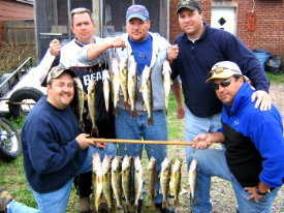
- As vast and full of structure as the Turtle Flambeau may be, it does give up two good advantages to the
angler looking for both walleyes and smallys . One, the walleyes and smallys frequent and feed in the same
areas. Two, from the beginning of May to the end of October, (with the exception of no weeds to fish early
year) the walleyes and smallmouth can be caught on and or around all the types of structures mentioned
above with only slight advantages to some of the areas being seasonal.
Now, which is the best structures to fish and how? Given my choice of areas and structure, I would head
straight to the center lake humps . The humps hold the best numbers of active feeding walleyes and
smallmouths at most times of the day and season because of the extensive cover. Now explaining the humps
a little better, most of the open water areas of the flowage average around 14-16 feet of water. The humps
that I look for rise up from 14-16 feet of water to anywhere from around 4 to 8 feet of water and can be as big
as 50-75 yards across t o as little as the size of a 16 foot boat. Best humps to look for do have submerged
stumps on the sides of them which can be seen if you watch closely on your graph.
Once finding the hump I want to fish. I throw a maker buoy on the up wind edge of the hump before it breaks
down into the deeper water. If no wind I estimate as close to center as I can and the shallowest to place my
marker. Once the marker is places I back off about 20 yards and start working the hump from the shallowest
point on down into the deeper water.
I cast up on top of the hump letting the jig settle to the bottom dragging the bottom and jigging off the
bottom 6 inches to a foot in and over the root systems of the submerged stumps and down the edges and
breaks of the hump.
I cover all sides of the hump and as far out as 30 yards off the hump. The walleyes and smallies sometimes
will scatter of the edges if the food is not on top or on the edges.
I prefer using a six and a half foot medium-light action Lamiglas, IM700 rod, Shimano reel spooled with 6lb.
test line. Jigging is my presentation of choice and use strictly I SG Slowfall Jigs in the 1/8th oz. size tipped
with either a minnow early spring and fall and a half of night crawler late spring thru out the summer. This
presentation works very well for both the walleyes and smallmouth.
Although there are numerous areas and structures on the Turtle Flambeau Flowage that can produce
excellent fishing, next time out give the humps and the presentations explained a try to put more walleyes
and smallmouth in your boat.
Mike "Doc" Sabec is a Wisconsin Licensed Guide that specializes in walleye and small mouth fishing on the
Turtle Flambeau Flowage. Doc is a lifetime resident of Mercer, WI., and has been fishing the Turtle Flambeau
Flowage for 39 years.


